AI research assistants for finding, reading and comparing papers.
Find AI research assistants that search academic literature, explain dense papers and extract findings into comparable tables. Check coverage in your field, whether answers cite their source, and export into your reference manager.
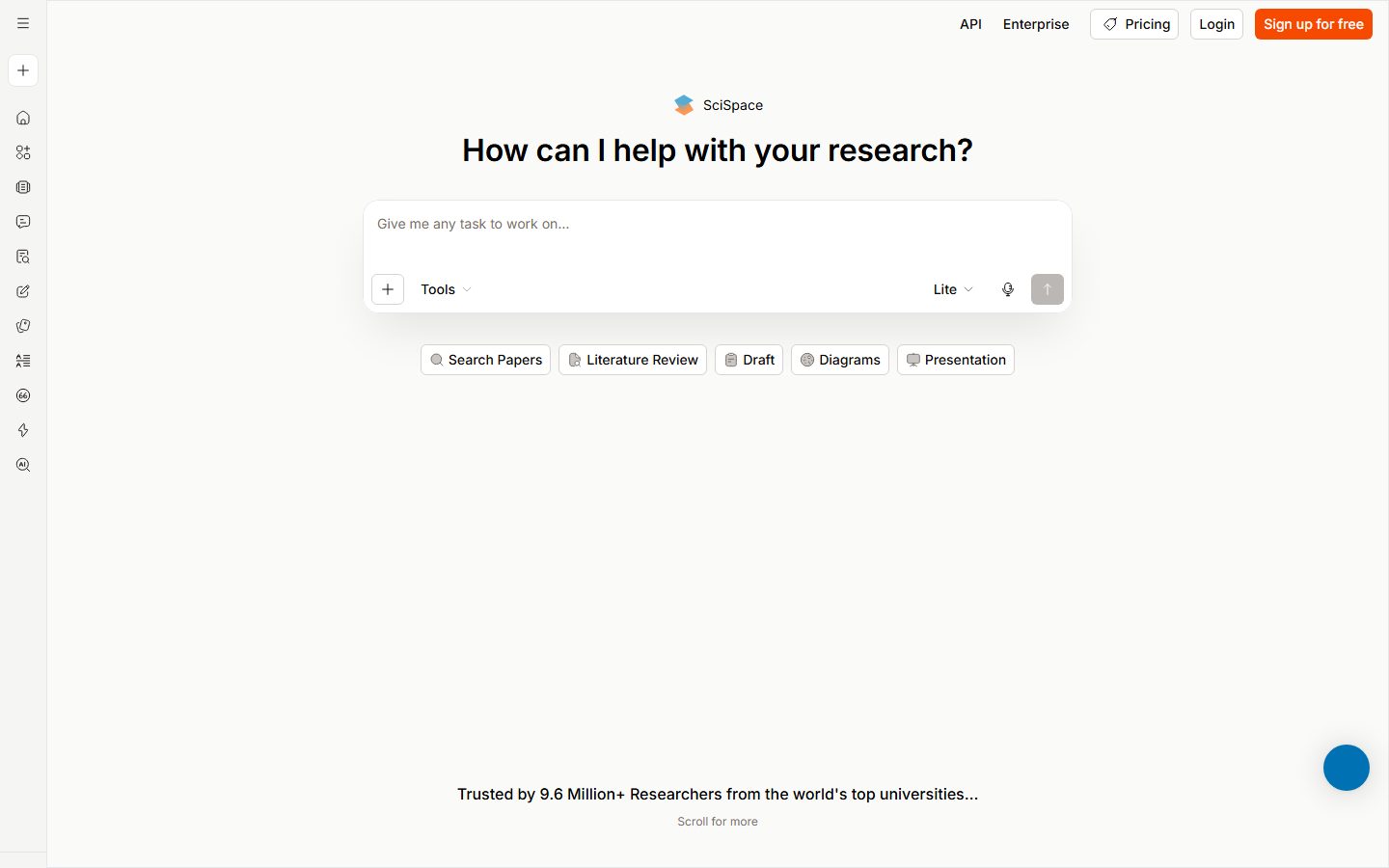
SciSpace is an AI research assistant for academic literature. It searches papers, explains dense passages in plain language, answers questions from a specific paper with the passage it used, and extracts fields across many papers into a table you can compare.
AI research tools help you get through literature faster. Instead of opening dozens of PDFs, you ask a research question, see which studies answer it and pull key findings into a table.
What are AI Research tools?
The good ones save time without hiding the source. Every answer should link back to the paper it came from, so you can check methods and results before citing anything.
What matters most when comparing tools
Cited sources. Answers must point to real papers you can open and verify yourself.
Coverage in your field. Indexes are strongest in biomedical and computer science; check your own area.
Data extraction. Tables of methods, sample sizes and outcomes make studies comparable.
Export. BibTeX, CSV or a reference manager connection keeps citations correct.
Match the tool to the job
Most teams get the best results by picking a tool built for the kind of design they do most often:
Free plans in Research are usually enough to test a tool and handle occasional work. Paid plans typically lift usage limits, unlock the more advanced models or exports, and add the team features you need once more than one person is involved. Prices on this page come from each tool's own pricing page, so confirm on their site before you buy.
Tips for better results
Ask a precise question rather than a topic; "does X reduce Y in adults over 60" beats "X and Y".
Always open the paper before quoting it. Summaries miss caveats in the methods and the sample.
Compare study design and sample size in the extraction table, not just the conclusions.
Export citations as you go, so references stay correct when you come to write.
The bottom line
Start with the kind of work you do most, shortlist two or three tools built for it, and try their
free plans on a real project. Compare how editable the results are, how well they fit your existing
workflow, and what the exports look like before you pay for a year.
Ready to pick a tool? Browse all 9 AI Research tools with pricing and verified details.
Browse tools
Cite the original paper, not the summary. Use these tools to find and understand studies faster, then read and reference the source itself.
How accurate are AI research assistants? +
Good at finding relevant papers and pulling out details, but they can misread tables and context. Check any number you intend to rely on.
Do they cover every discipline? +
Coverage is strongest in biomedical, life sciences and computer science. Humanities and very new fields typically have fewer indexed papers.
Which AI Research tools are listed on Ai Product Index? +
9 AI Research tools are listed, including SciSpace, Quetext, Petal, GeoSpy AI, Liner, OpenRead. Verified listings show full features, pricing, and pros and cons.