
Pi
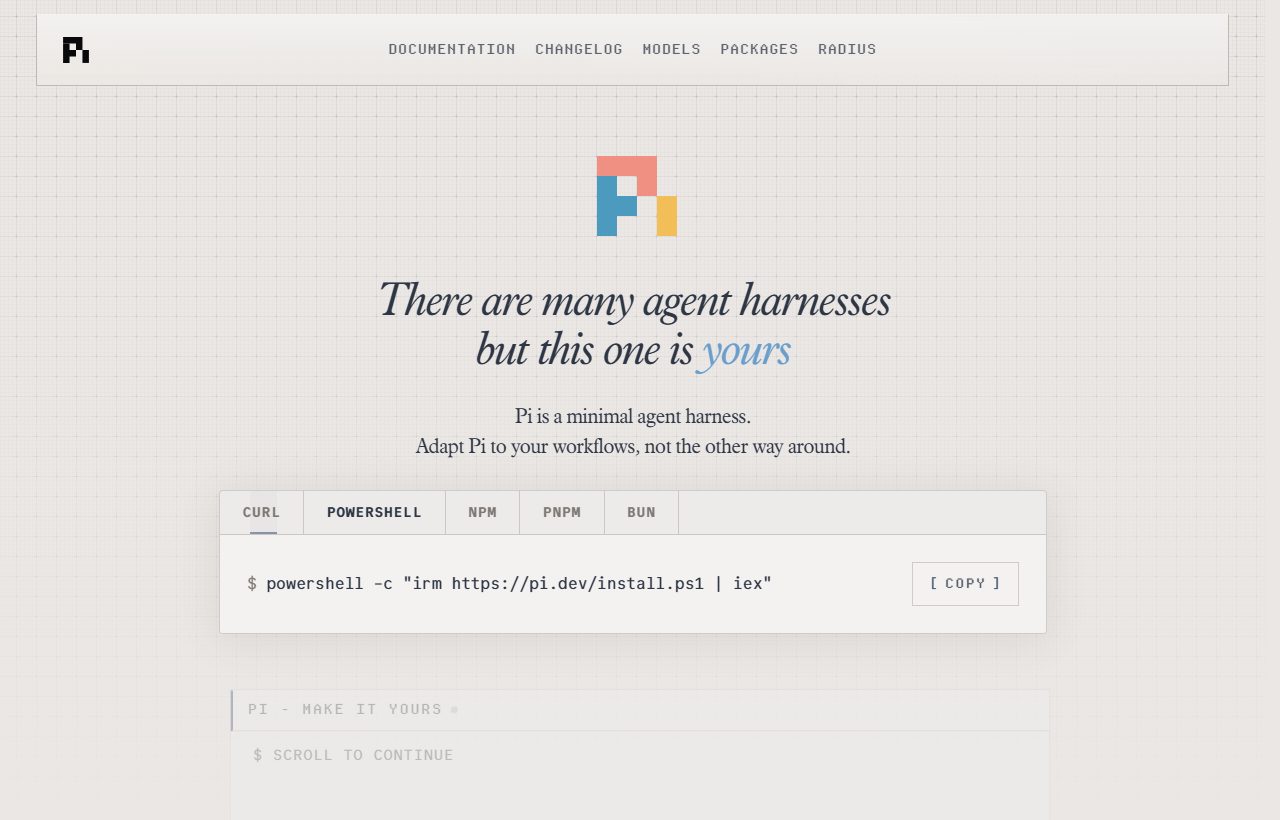
UNCLAIMEDThere are many agent harnesses but this one is yours
Overview
Pi is a minimal, open-source coding agent harness that runs in the terminal. It was published in late 2025 and is now developed under Earendil Inc. The core is released under the MIT license and is meant to be shaped around a developer's own workflow instead of imposing one.
About Pi
Pi is a minimal, open-source coding agent harness that runs in the terminal. It was published in late 2025 and is now developed under Earendil Inc. The core is released under the MIT license and is meant to be shaped around a developer's own workflow instead of imposing one.
Out of the box Pi keeps a small core and pushes most behavior into extensions, skills, prompt templates and themes. Extensions are TypeScript modules that can add tools, commands, shortcuts and interface elements, and they are used for things like sub-agents, plan mode, permission gates and sandboxing. Sessions are stored as trees, so users can branch, revisit earlier points, export a session to HTML or share it as a gist.
Pi works with a wide range of model providers, including Anthropic, OpenAI, Google, Azure, Bedrock, Mistral, Groq, xAI, OpenRouter and local models through Ollama, and models can be switched mid-session. Besides the interactive terminal interface it offers a print/JSON mode, an RPC mode over standard input and output, and an SDK for embedding the agent in other software.
Demo video Locked
Hidden until this listing is claimed The owner adds this when they verify Pi.
Claim to unlock →Pi homepage
✨ Key Features
Extension system
TypeScript extensions can add tools, commands, shortcuts and interface elements.
Skills and prompt templates
Reusable capability packages and Markdown prompts can be invoked by name.
Tree-structured sessions
Sessions can be branched, navigated, exported to HTML or shared as a gist.
Mid-session model switching
Users can change the active model at any point in a session.
Agent steering
Steering messages redirect a running agent while follow-ups wait until it finishes.
Multiple run modes
It runs as an interactive TUI, in print/JSON mode, over RPC or via an SDK.
🎯 Target Audience
Software developers
Run a lightweight coding agent in the terminal against their own repositories.
Power users
Build custom workflows with extensions, skills and prompt templates.
Tool builders
Embed the agent in their own products through the SDK or RPC mode.
Teams sharing tooling
Package and distribute extensions and prompts through npm or git.
Local model users
Pair the harness with models served locally through Ollama.
⚖️ Pros & Cons
Pros
Cons
Founder / CEO Locked
Hidden until this listing is claimed The owner adds this when they verify Pi.
Claim to unlock →Pricing Prices from the maker · check the maker's own site for current plans
Open source
$0
- MIT-licensed core
- Bring your own model provider or API key
- Install via script, npm, pnpm or bun
❓ Frequently Asked Questions
Is Pi free?
Yes. Pi is open source under the MIT license; users pay only for the model provider they connect.
Who makes Pi?
Pi is developed under Earendil Inc.
Which models does Pi support?
It supports providers including Anthropic, OpenAI, Google, Azure, Bedrock, Mistral, Groq, xAI, OpenRouter and local models via Ollama, with custom providers configurable.
Can Pi be embedded in other apps?
Yes. Pi offers an SDK and an RPC mode over standard input and output for integration.
Does Pi support MCP?
Yes. The site lists built-in MCP support in addition to MCP extensions.
What is Pi?
A terminal-based coding agent.
What are the key features of Pi?
Pi offers 6 main features. Extension system: TypeScript extensions can add tools, commands, shortcuts and interface elements. Skills and prompt templates: Reusable capability packages and Markdown prompts can be invoked by name. Tree-structured sessions: Sessions can be branched, navigated, exported to HTML or shared as a gist. Mid-session model switching: Users can change the active model at any point in a session. Agent steering: Steering messages redirect a running agent while follow-ups wait until it finishes. Multiple run modes: It runs as an interactive TUI, in print/JSON mode, over RPC or via an SDK.
How much does Pi cost?
Pi uses a Free pricing model. Available plans include Open source at $0.
What are the pros and cons of Pi?
Key advantages include: MIT-licensed open-source core; Works with many model providers, including local models; Highly customizable through TypeScript extensions; Offers TUI, JSON, RPC and SDK modes. Potential drawbacks: Minimal core means many features require extensions or setup; Model usage costs depend on the provider the user connects; Terminal-first tool with a learning curve for non-developers.
What type of tool is Pi?
Pi is listed under IDE on Ai Product Index.
Does Pi offer a free plan?
Yes, Pi offers a free plan. MIT-licensed core. Bring your own model provider or API key. Install via script, npm, pnpm or bun
SIDE BY SIDE
Pi vs Cursor vs Uizard
See at a glance which tool leads on each point. ★ = best in row
| CRITERIA | P Pi THIS TOOL | C  Cursor VERIFIED | U  Uizard VERIFIED |
|---|---|---|---|
| Best for | There are many agent harnesses but this one is yours | AI Coding Agent for Building Ambitious Software | UI Design Made Easy, Powered By AI |
| Starting price | Free | $20 / month | $12 / month ★ Lowest |
| Free plan | Yes | No | Yes |
| Verified listing | No | Yes | Yes |
| Pricing model | Free | Paid | Freemium |
| Founded | 2025 | 2022 | 2018 ★ Longest running |
| Links | View listing | View listing | View listing |
REVIEWS
What people say about Pi
No reviews yet
If you have used Pi, yours would be the first. Create a free account to leave a review, or sign in if you already have one.
MORE LIKE THIS